META DESCRIPTION
Textile waste rags are more cost-effective, absorbent, and eco-friendly than paper towels in factories. Learn how they save money and reduce waste.
Introduction
In industrial environments, workers constantly need cleaning materials for machinery, tools, and surfaces. Traditionally, they used paper towels for this purpose. However, most factories now prefer textile waste rags because they provide superior cleaning performance and lead to long-term cost savings.
What Are Textile Waste Rags?
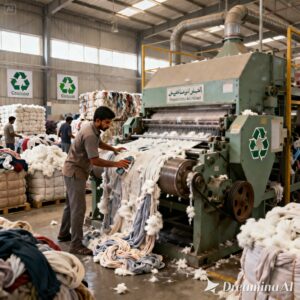
Textile waste rags come from leftover fabric pieces generated during garment manufacturing. Workers collect, clean, sort, and press these scraps into compact bales before supplying them to factories. Therefore, factories produce these rags from recycled cotton and blended materials that would otherwise be discarded as waste.
Consequently, the textile industry considers textile waste rags a sustainable cleaning solution because they promote resource reuse and support waste reduction.
Cost Comparison: Textile Rags vs. Paper Towels
From a cost perspective, industries find textile waste rags significantly more economical to use. While workers consume paper towels rapidly and need to repurchase them frequently, they reuse cotton rags multiple times before disposing of them.
For example, a single kilogram of cotton rags can clean far more surface area than a full roll of paper towels. As a result, factories that implement textile rags reduce their total cleaning costs by nearly 40–60%.
Furthermore, companies minimize storage and disposal expenses because they pack cotton rags in compressed bales, which generate less waste volume.
Absorbency Comparison: Which Performs Better?
In terms of absorbency, textile waste rags are far superior. They are capable of holding up to ten times their weight in liquids such as oil, grease, and water. Paper towels, on the other hand, lose strength and tear easily when saturated.
Therefore, workshops and heavy industrial environments prefer cotton rags because they require a stronger wiping medium. Additionally, absorbent hosiery and fleece rags deliver smooth and lint-free cleaning performance that paper towels cannot achieve.
Sustainability Benefits
Moreover, textile waste rags offer one of the strongest advantages for sustainability. Since manufacturers produce them from recycled fabrics, they reduce the demand for virgin pulp used in paper towels. In this way, they conserve energy, water, and tree resources.
By adopting textile rags, factories actively contribute to waste reduction, landfill diversion, and circular manufacturing practices. Thus, sustainability goals can be achieved while maintaining industrial hygiene standards.
Industrial Use Cases
In addition, textile waste rags are used across a wide range of sectors, including:
- automotive and engineering workshops
- paint and chemical plants
- textile and garment manufacturing units
- food-processing industries (for non-lint grades)
- printing and packaging facilities
Accordingly, they are recognized as the most practical wiping solution across Pakistan’s industrial landscape.
Conclusion
To summarize, textile waste rags outperform paper towels in every aspect — cost, absorbency, and sustainability. They provide a durable, reusable, and eco-friendly cleaning method that reduces both operational expenses and environmental impact.