META DESCRIPTION
Cutting-room waste can be converted into saleable cotton rags. This step-by-step guide explains collection, sorting, cleaning, processing and quality control for factories.
Introduction
Waste generation in cutting departments is one of the largest sources of textile loss in garment factories. However, you can reclaim substantial value when you convert fabric offcuts into cotton rags. Consequently, you reduce disposal costs and create new revenue or internal savings. Below, we provide a clear step-by-step process to guide cutting departments from scrap to rags with minimal disruption.
You should consider conversion because it offers several benefits.
Firstly, you can achieve reductions in landfill volume and disposal costs by converting textile waste. Moreover, you can supply internal cleaning materials from the converted fabric, which leads to ongoing cost savings. Finally, you can improve environmental credentials because you discard less waste and encourage circular practices.
Overview of the process (at a glance)
- They organize the collection
- They remove the contaminants and pre-clean the material.
- They carry out cutting/shredding or bundling depending on the target rag type.
- They perform baling and compression for storage or sale.
- They complete labelling and quality checks.
- They manage inventory, sales, and internal distribution
They explain each step in detail below.
Step-by-step conversion process
Step 1 — Scrap collection (be systematic)
Collect scraps at the source in clearly labelled bins. Therefore, place separate bins beside cutting tables and sewing lines to start material segregation immediately. Additionally, provide training to operators to ensure they do not mix contaminated or non-textile items (such as paper patterns, needles, broken clips) with fabric waste.
Step 2 — Primary sorting (by fabric and contamination)
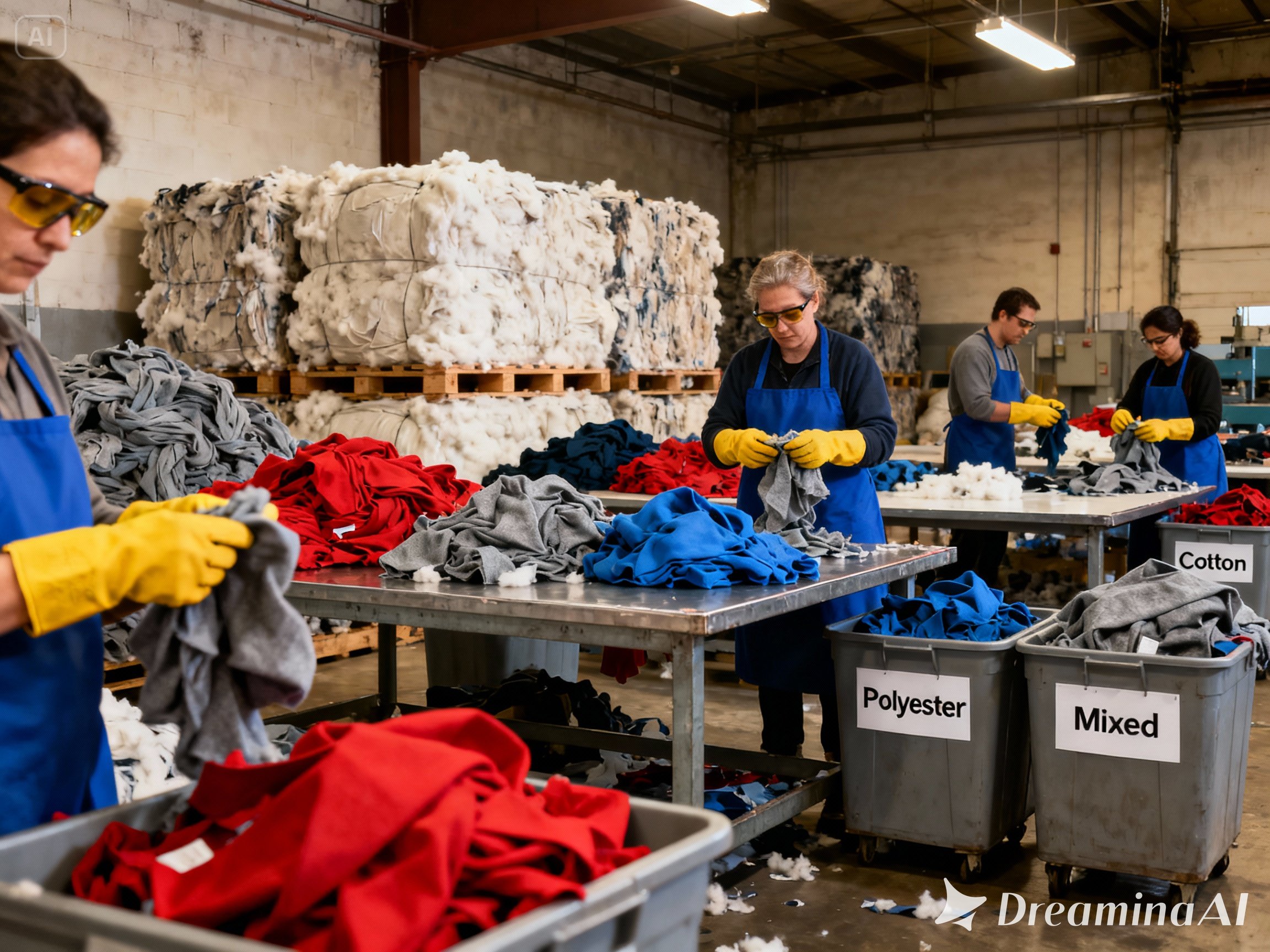
Once collected, transfer scraps to a central sorting area. There, perform manual sorting to separate the materials.
- 100% cotton from blends and synthetics
- heavily soiled or oil-contaminated pieces from clean scraps
- large usable offcuts from tiny trimmings
Create material streams for different rag grades (white/hosiery, coloured, mixed, heavy woven).
Step 3 — Cleaning & contaminant removal
After sorting, remove contaminants such as metal bits, labels, elastics, and buttons. Shake out or vacuum small dust and loose particles. If needed, perform light industrial washing to reduce stains and oils. Ensure drying and odour control to prevent mildew.
Step 4 — Size reduction / preparation for rag use
Depending on the desired rag product, scrap pieces should be either:
- cut into standard rag sizes (for example 30×30 cm or 40×40 cm) using a rotary cutter or guillotine; or
- left as irregular pieces and simply compressed for mixed-rag bales.
Choose the production method based on buyer needs or internal use, such as polishing, heavy wiping, or lint-sensitive tasks.
Step 5 — Bundling, pressing & baling
After size preparation, bundle and press the pieces. Use mechanical balers or manual compression systems to maximize bale density for storage and transport. Subsequently, tie and shrink-wrap the bales where possible to protect the material from moisture and contamination.
Step 6 — Labelling & grade declaration
Label each bale with essential information, such as grade (white, coloured, hosiery, fleece, or mixed), approximate weight, and any notable contamination or special handling instructions. Include a short quality note (e.g., “Lint-free, suitable for optical polishing”) when relevant. This way, buyers and internal users can quickly select the correct material.
Step 7 — Quality control checks
Perform random sampling on each bale to verify key quality metrics such as fabric composition, residual contamination, and absorbency. If internal use is intended, carry out small-scale field tests (wipe tests on typical surfaces) to confirm suitability. This approach will minimize returns and waste of produced rags.
Step 8 — Storage, inventory & distribution
Store bales in a dry, ventilated area and arrange them by grade. Record inventory digitally or in logbooks to keep stock levels visible. This allows you to manage internal distribution schedules or external sales invoices accurately and without error.
Step 9 — Sales or internal usage strategy
If there are surplus rags, approach local buyers such as cleaning companies, workshops, or rag wholesalers. Alternatively, reserve rags for in-plant use in maintenance, paint shops, and finishing areas. Set prices based on local market rates or internal cost savings calculations.
Equipment & safety considerations
- Provide and use PPE (gloves, masks) consistently because fabric dust and residual chemicals may be present.
- Guard and maintain the cutting and baling equipment; follow lockout procedures.
- Treat or dispose of wash water from any pre-washing according to local regulations to prevent environmental non-compliance.
- Enforce fire safety protocols because compressed fabric bales can catch fire.
We will realize the benefits.
- Disposal costs will be reduced and landfill space will be saved.
- Cleaning budgets will be lowered because rags will be produced in-house.
- Revenue can be generated if surplus rags are sold.
- Environmental performance will be improved and waste targets will be supported.
- Worker engagement can be increased through visible resource-saving initiatives.
Common pitfalls and how they should be avoided
- You should not allow mixed contamination; therefore, enforce strict source separation.
- Moisture must not be trapped in bales; otherwise, mildew will be generated — therefore, thorough drying is essential.
- Quality inconsistency should be prevented by regular sampling and clear grade definitions.
Complete the simple cost-benefit checklist before starting.
- Current disposal cost per month: __________
- Estimated internal rag requirement per month: __________
- Projected savings from internal substitution: __________
- One-time equipment cost (cutters, baler): __________
- Break-even period (months): __________
When we complete the checklist, we can make an informed decision about the investment.
Final notes & quick action plan (30-day rollout)
- Week 1: Collection bins installed and staff training performed.
- Week 2: Sorting area established and pilot batch processed.
- Week 3: QC protocol implemented and small internal trials run.
- Week 4: Full-scale baling started and sales / internal distribution channels confirmed.
By following the above plan, initial results and savings will be demonstrated quickly.
Conclusion
By converting cutting-room scrap into high-quality cotton rags, we can significantly reduce waste and achieve continuous cost savings. Moreover, we can lower environmental impact by reducing landfill dependence and promoting material circularity. When we follow proper collection, sorting, cleaning, and baling procedures, we can maintain consistent rag quality and reliably supply both internal departments and external buyers. Ultimately, adopting this step-by-step conversion system transforms cutting departments from waste-generating units into value-creating operations, supporting long-term sustainability goals across the entire factory.