Meta Description
Discover how oil absorbent cotton rags are used for heavy machinery cleaning. Learn about GSM, thickness, grease wiping, and spill control for factories and workshops.
Introduction
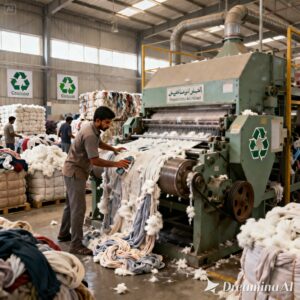
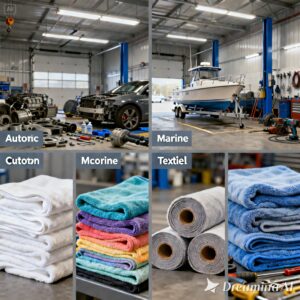
Heavy machinery requires constant cleaning because oil, grease, and hydraulic fluid buildup can affect performance and safety. Therefore, factories, workshops, automotive plants, textile mills, and engineering units widely use oil-absorbent cotton rags. Their natural absorbency, thickness, and GSM strength make them suitable for handling tough industrial tasks. In this guide, we explain essential specifications such as GSM, rag thickness, and application types to help you select the correct rag efficiently.
Why Oil Absorbent Cotton Rags Are Needed for Heavy Machinery
Heavy-duty equipment frequently exposes itself to lubricants and mechanical fluids. Consequently, cleaning becomes more demanding, and users require highly absorbent wiping materials. People prefer cotton rags because they offer excellent absorption.
- Oil absorption is naturally higher due to cotton’s fiber structure
- Grease wiping is more effective because it easily creates friction.
- Soft handling reduces the risk of scratching machinery surfaces
- Reusability lowers cost compared to paper or synthetic wipes
Therefore, cotton rags help ensure that maintenance routines are completed quickly and safely.
Understanding GSM for Industrial Cotton Rags
GSM (grams per square meter) indicates fabric density. Therefore, higher GSM rags are considered more absorbent and more durable for heavy machinery. (Note: This sentence is already in active voice.)
Common GSM Ranges
- 120–150 GSM: Light-duty cleaning and dust removal
- 150–180 GSM: Medium grease cleaning and machine wiping
- 180–220 GSM: Heavy oil absorption and spill control
- 220+ GSM: Maximum thickness for hydraulic leaks and industrial oil spills
Higher GSM rags are usually selected for workshops where oil leakage is frequent.
Rag Thickness: Why It Matters
In addition to GSM, thickness plays a major role in determining wiping performance. Thick rags can absorb more oil in a single pass, and they are less likely to tear during tough cleaning tasks. As a result, heavy machinery maintenance becomes more efficient.
Types of Thick Cotton Rags
- Terry towel pieces: Highly absorbent, ideal for hydraulic oil
- Fleece cotton rags: Soft texture, excellent for engine grease
- Woven cotton rags: Strong structure, perfect for wiping tools
Because of their density, thick rags remain a preferred choice in engineering and auto workshops.
Oil Spills & Leak Management With Cotton Rags
When oil spills on shop floors, you need a quick response to prevent slipping hazards. Therefore, workers often place cotton rags at spill points or wipe residual leaks with them.
Advantages for Spill Control
- rapid absorption
- low cost
- easy disposal
- high coverage area
- compatibility with hazardous oil-waste bins
In many industries, spill kits are prepared with cotton rags as an essential component.
Grease Wiping: How Cotton Rags Perform Better
Although microfiber and synthetic wipes exist, cotton rags continue to outperform them in grease wiping. This is because cotton’s natural fibers generate friction, which helps in removing stubborn grease layers from machine parts.
Consequently, tasks such as:
- engine maintenance
- bearing cleaning
- tool wiping
- maintenance of hydraulic systems
are completed more efficiently with cotton rags.
Best Cotton Rag Types for Heavy Machinery
1. White Hosiery Cotton Rags
- Low lint
- High absorbency
- Suitable for engine wiping and oil stains
2. Colored Woven Cotton Rags
- Durable
- Ideal for cleaning machine parts
3. Terry Cotton Rags
- Thick loops
- Highest absorption capacity
4. Fleece Cotton Rags
- Soft and thick
- Excellent for greasy surfaces
Each category is effective for a specific industrial requirement.
Packaging Options for Industrial Use
To maintain cleanliness and ensure easy distribution, cotton rags are usually packed in:
- Compressed bales (10–50 kg): Saves space
- Polybag bundles: Keeps rags dust-free
- Sorted graded packs: Ensures uniform quality
Proper packaging ensures that contamination risks are minimized inside workshops.
Conclusion
In heavy machinery environments, high-GSM and thick cotton rags are considered essential tools for oil and grease management. Their natural absorbency, durability, and cost-effectiveness make them reliable for daily maintenance tasks. Moreover, their ability to handle oil spills, wipe engines, and clean hydraulic systems ensures that machinery remains in optimal condition. As a result, significant improvements in cleanliness, safety, and operational efficiency can be achieved when the correct type of oil-absorbent cotton rag is selected.