Meta Description
Cotton rags offer a sustainable cleaning solution for industries. Learn how carbon emissions, pollution, and waste are reduced through eco-friendly rag practices.
Introduction
In today’s manufacturing environment, companies increasingly prioritize sustainable cleaning methods. Therefore, they adopt cotton rags as an eco-friendly alternative to synthetic wipes. The natural composition of cotton rags helps industries minimize waste, reduce pollution, and significantly lower their carbon footprint.
1.Using natural fibers reduces pollution
Synthetic wipes often use plastics during production, releasing micro-particles and harmful chemicals. In contrast, manufacturers make cotton rags from recycled natural fabrics, ensuring they do not create additional plastic waste. As a result, they minimize environmental pollution during both production and disposal.
Furthermore, because cotton is biodegradable, its breakdown process does not release toxic elements. Consequently, the burden on landfills is reduced naturally.
2.Recycling practices lower carbon emissions
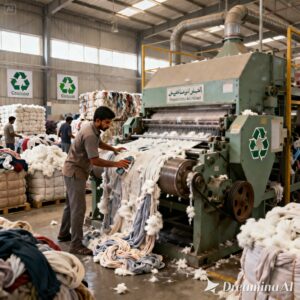
Cotton rags come from textile waste that would otherwise be discarded, which is a major advantage. When fabric scraps are repurposed into cleaning rags, industries avoid the need to produce new raw materials. Therefore, energy consumption, transportation emissions, and manufacturing processes decrease dramatically.
Moreover, industries that switch from disposable synthetic wipes to cotton rags use fewer fossil-fuel-based materials. As a result, they decrease their carbon footprint across the supply chain.
3.Producing cotton rags requires less energy
Unlike synthetic cleaning materials, which undergo chemical treatments, resin bonding, and heat-intensive processing, cotton rags require minimal energy to convert. Fabric cutting, sorting, and baling use far less electricity and emit fewer greenhouse gases.
Additionally, because cotton rags are washable and reusable, the need for constant reordering is reduced. Thus, long-term energy savings become possible.
4.Reusability minimizes waste generation
Factories can reuse cotton rags multiple times after wiping oil, dust, or machinery surfaces by washing and recycling them repeatedly. This practice greatly reduces the volume of disposable cleaning waste produced by factories.
In contrast, people discard non-woven wipes after light use, which increases the environmental load. Hence, industries that want to adopt zero-waste initiatives often prefer to use cotton rags.
5.Cotton rags support a circular cleaning system
Because textile waste provides the source of cotton rags and industries can recycle them after use, this system creates a complete circular cleaning cycle. This circularity ensures that industries use fewer resources and produce less waste.
Consequently, the industry lowers its overall environmental impact while supporting global sustainability goals and carbon-neutral strategies.
Conclusion
In conclusion, integrating cotton rags into daily operations makes sustainable industrial cleaning possible. Their natural fibers, low energy requirements, and reusability help industries reduce pollution and minimize their carbon footprint. Therefore, companies seeking greener practices can rely on cotton rags as a practical and impactful solution. As the demand for sustainable processes continues to rise, industries will continue to prefer cotton rags for eco-efficient cleaning.