Meta Description
Learn how to choose the right wiping rags for your industry with a decision matrix for automotive, marine, textile, and maintenance sectors to improve efficiency and reduce costs.
Introduction
Every industry requires reliable cleaning materials to maintain safety, efficiency, and product quality. However, not all wiping rags perform equally in every environment. Therefore, businesses must evaluate absorbency, durability, lint levels, and cost before making a purchase.
Whether you operate in automotive, marine, textile, or general maintenance sectors, selecting the right wiping rags directly impacts operational performance. In this guide, you will find a clear decision matrix to help you choose the most suitable option for your industry.
Key Factors to Consider Before Buying Wiping Rags
Before reviewing industry specific recommendations, consider these essential factors:
- Absorbency Does the rag handle oil, water, or chemicals effectively?
- Lint Level Will fibers interfere with machinery or finished surfaces?
- Durability Can the rag withstand repeated use or heavy scrubbing?
- Material Type 100% cotton, hosiery knit, fleece, or blended fabric?
- Cost per Use Does the rag provide long-term value?
- Sustainability Can workers wash and reuse it?
By evaluating these criteria first, you can narrow down suitable options more efficiently.
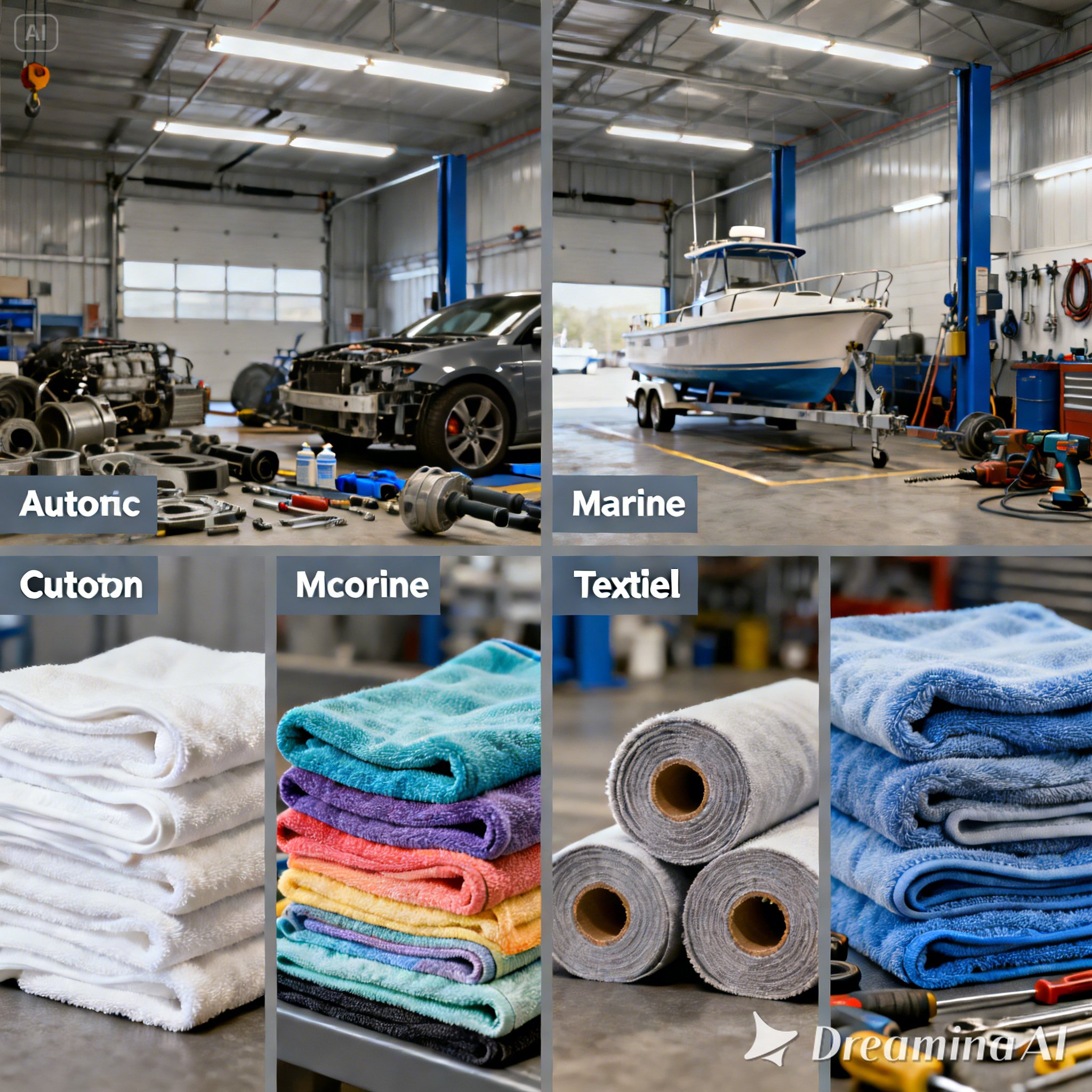
Decision Matrix Wiping Rags by Industry
Below is a simplified decision matrix to guide your selection:
| Industry | Recommended Rag Type | Key Features Needed | Why It Works |
|---|---|---|---|
| Automotive | Colored Cotton or Fleece Rags | High absorbency, durable, handles grease | Effectively absorbs oil and withstands heavy duty use |
| Marine | White Cotton or Hosiery Rags | Low lint, salt resistant, soft texture | Prevents surface scratches and supports polishing |
| Textile Mills | White Hosiery Rags | Lint-free, soft, clean finish | Protects fabrics and prevents contamination |
| General Maintenance | Mixed Cotton Rags | Cost-effective, versatile, reusable | Suitable for daily cleaning tasks |
| Manufacturing Plants | Fleece or Heavy Cotton Rags | Thick, strong, high absorption | Handles industrial spills efficiently |
| Printing Industry | White Lint-Free Rags | Minimal fiber shedding | Maintains print quality and surface precision |
Automotive Industry: Strength and Oil Absorption
Automotive workshops handle oil, grease, and mechanical fluids daily. Therefore, they require highly absorbent and durable wiping materials.
Colored cotton rags and fleece rags perform exceptionally well in this environment. Because they absorb oil quickly and resist tearing, mechanics complete cleaning tasks efficiently. Moreover, darker colors hide stains, which improves visual cleanliness in busy workshops.
Marine Industry Softness and Surface Protection
Marine operations demand careful surface maintenance. Boats and marine equipment often feature polished metal, fiberglass, and painted surfaces.
For this reason, white cotton or hosiery rags offer the best solution. They produce low lint and provide a soft texture that prevents scratches. Additionally, workers can monitor dirt removal more clearly when they use white materials.
Textile Industry Clean and Lint Free Performance
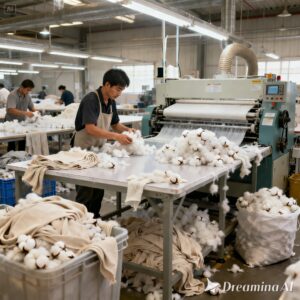
Textile mills and garment factories must maintain strict cleanliness standards. Even small fibers can damage fabric quality.
Therefore, white hosiery rags serve as an ideal choice. Their low lint structure reduces contamination risks. Furthermore, their soft knit fabric protects delicate textiles during handling and finishing processes.
General Maintenance Versatility and Cost Efficiency
Facility management teams perform a wide range of cleaning tasks. Consequently, they require versatile and economical wiping solutions.
Mixed cotton rags offer flexibility for wiping surfaces, cleaning spills, and general upkeep. Because suppliers package them in bulk at competitive prices, businesses reduce overall cleaning expenses.
Manufacturing Plants Heavy Duty Performance
Manufacturing facilities often encounter chemical spills, lubricants, and heavy grime. In such cases, thin wiping materials fail quickly.
Instead, heavy cotton or fleece rags provide the thickness and absorbency required for industrial environments. As a result, workers manage large spills more efficiently and reduce material waste.
Final Tips for Smart Purchasing
Although industry recommendations help narrow choices, always request samples before placing bulk orders. Testing rags under real working conditions ensures proper performance.
Additionally, compare cost per use rather than upfront price alone. Reusable cotton rags often deliver greater long-term savings. Finally, partner with suppliers who maintain consistent quality and reliable delivery schedules.
Conclusion
Choosing the right wiping rags for your industry requires careful evaluation of performance needs, operational demands, and budget considerations. Automotive, marine, textile, and manufacturing sectors each require specific features.
Therefore, when you use a structured decision matrix and prioritize absorbency, durability, and lint control, you make a smarter purchasing decision. Ultimately, the right wiping rag improves efficiency, enhances safety, and reduces long-term costs.