Meta Description
Discover whether cotton rags are safe for food industry cleaning. Learn expert insights on hygiene standards, HACCP guidelines, and best practices for safe food facility sanitation.
Introduction
The food industry operates under strict hygiene regulations to protect consumers and maintain product quality. Every cleaning material used in food processing areas must meet specific sanitation standards. Therefore, businesses must carefully evaluate whether cotton rags are suitable for cleaning tasks in food facilities.
Many experts confirm that cotton rags can be safe for food industry cleaning when companies follow proper hygiene practices and comply with food safety guidelines. In particular, food manufacturers often implement strict procedures based on the principles of Hazard Analysis and Critical Control Points (HACCP). These guidelines ensure that cleaning tools do not introduce contamination into food production environments.
Understanding Hygiene Requirements in the Food Industry
Food production facilities must maintain extremely high levels of cleanliness. Consequently, every cleaning material must support sanitary operations and prevent cross-contamination.
When facilities use cotton rags in food environments, they must ensure that the rags:
- Contain 100% clean cotton fibers
- Remain free from dyes that may bleed
- Do not release excessive lint
- Undergo regular washing and sanitization
Therefore, many facilities prefer white cotton rags, because workers can easily identify dirt, grease, and contamination during cleaning.
Why Cotton Rags Can Work in Food Processing Environments
Cotton rags offer several advantages that make them suitable for controlled food-processing cleaning tasks.
High Absorbency
Cotton fibers absorb liquids efficiently. As a result, workers can remove spills quickly and keep work surfaces dry.
Durability
Unlike disposable wipes, cotton rags can withstand repeated washing and sanitization cycles. Consequently, companies maintain consistent cleaning performance while controlling costs.
Heat Resistance
Cotton fabrics tolerate high-temperature washing. Therefore, facilities can sterilize them effectively during laundry processes.
HACCP Considerations for Cleaning Materials
Food safety professionals rely on Hazard Analysis and Critical Control Points systems to identify and control contamination risks.
When facilities use cotton rags, they should include the following controls within their HACCP plan:
1. Controlled Sourcing
Procurement teams must source cotton rags from reliable suppliers. Suppliers should provide clean, sorted, and contamination-free materials.
2. Dedicated Cleaning Zones
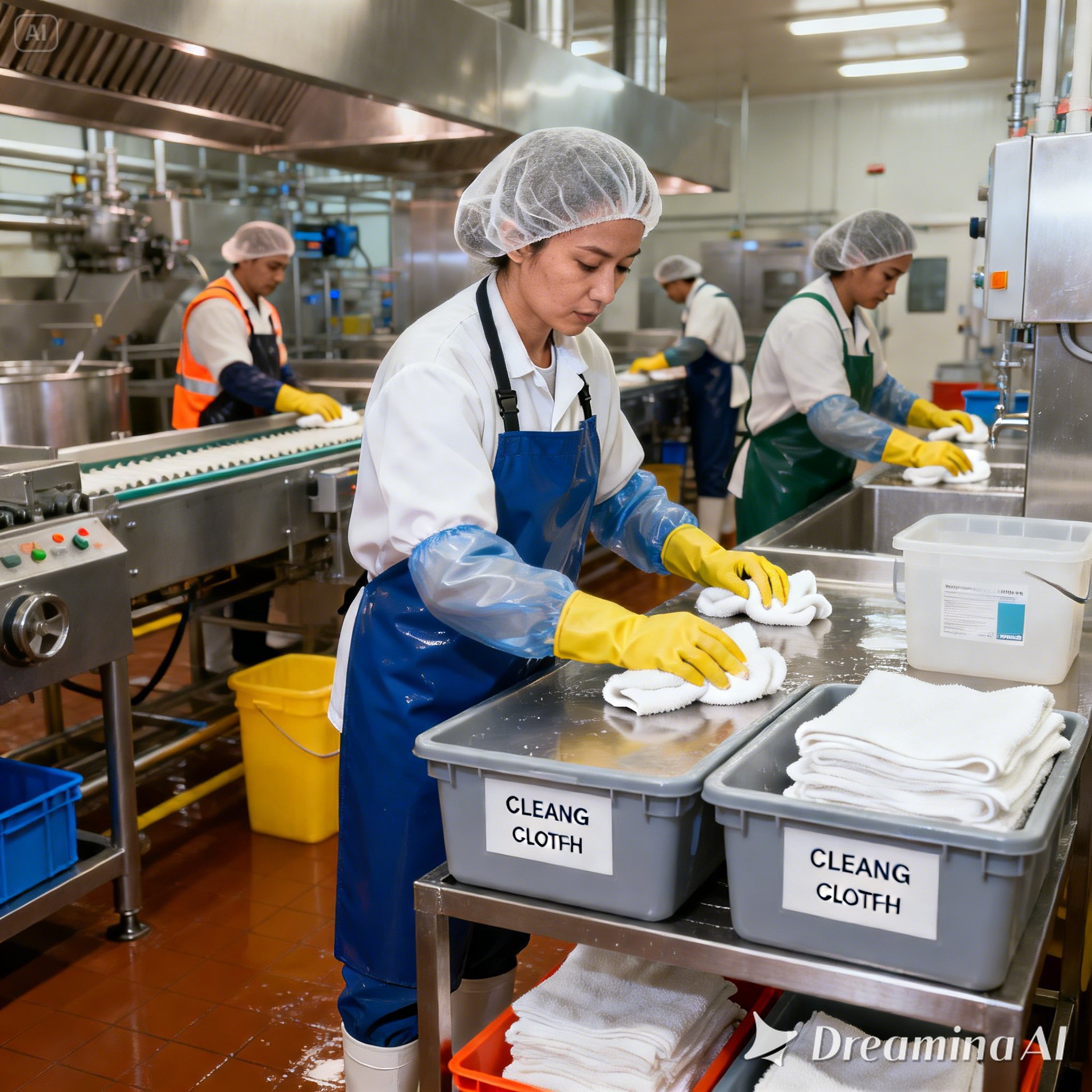
Facilities should assign specific rags to specific cleaning areas. For example, workers should not use the same rag for equipment cleaning and floor wiping.
3. Regular Sanitization
Laundry teams should wash cotton rags at high temperatures with approved cleaning agents. This process removes bacteria and food residues effectively.
4. Inspection and Replacement
Supervisors should inspect rags frequently. If rags show excessive wear, linting, or contamination, staff should remove them from service immediately.
When Cotton Rags Should Not Be Used
Although cotton rags offer many advantages, facilities must avoid improper usage. For instance, workers should not use damaged or contaminated rags near food contact surfaces.
Additionally, companies must avoid mixed-fabric rags that contain unknown synthetic materials. Such fabrics may release fibers or chemicals that compromise food safety.
Therefore, proper quality control remains essential.
Best Practices for Safe Usage
To ensure compliance with food safety standards, facilities should follow these best practices:
- Use lint-free white cotton rags
- Implement separate rag color systems for different cleaning zones
- Maintain daily washing and sanitization routines
- Store cleaned rags in sealed sanitary containers
- Train employees on proper cleaning protocols
When businesses follow these procedures, cotton rags become a reliable and safe cleaning solution.
Conclusion
Cotton rags can support safe and efficient cleaning in food industry environments when facilities follow strict hygiene practices. By selecting high-quality cotton materials, implementing proper washing procedures, and applying HACCP guidelines, businesses reduce contamination risks effectively.
Ultimately, when companies manage cleaning materials responsibly, cotton rags provide a durable, cost-efficient, and sustainable option for maintaining hygiene in food production facilities.