Meta Description
Learn the best storage conditions for cotton rags, including humidity control, pallet stacking, and warehouse rules to prevent contamination and maintain quality.
Introduction
Proper storage plays a critical role in maintaining the quality of cotton rags. Even high-quality rags can lose their effectiveness if businesses store them in poor conditions. Therefore, companies must follow structured storage practices to prevent contamination, moisture damage, and material degradation.
By controlling humidity, organizing pallet stacking, and enforcing warehouse rules, businesses can protect cotton rags and ensure consistent performance in industrial use.
Why Proper Storage Matters
Cotton rags absorb moisture, dust, and contaminants easily. As a result, improper storage can lead to:
- Mold growth due to excess humidity
- Contamination from dust, oil, or chemicals
- Reduced absorbency and cleaning performance
- Health and safety risks in sensitive environments
Therefore, proper storage is not optional it directly impacts product quality and usability.
1. Humidity Control
First, businesses must control humidity levels in storage areas. Cotton fibers naturally absorb moisture from the air. Consequently, high humidity can lead to mold, odor, and fabric damage.
Best Practices
- Maintain humidity levels between 40%–60%
- Use dehumidifiers in humid environments
- Ensure proper ventilation and airflow
- Avoid storing rags near water sources or damp walls
By maintaining stable humidity, companies preserve fabric quality and prevent microbial growth.
2. Proper Pallet Stacking
Next, organized pallet stacking helps protect cotton rags from contamination and physical damage.
Key Guidelines
- Store rags on elevated pallets, not directly on the floor
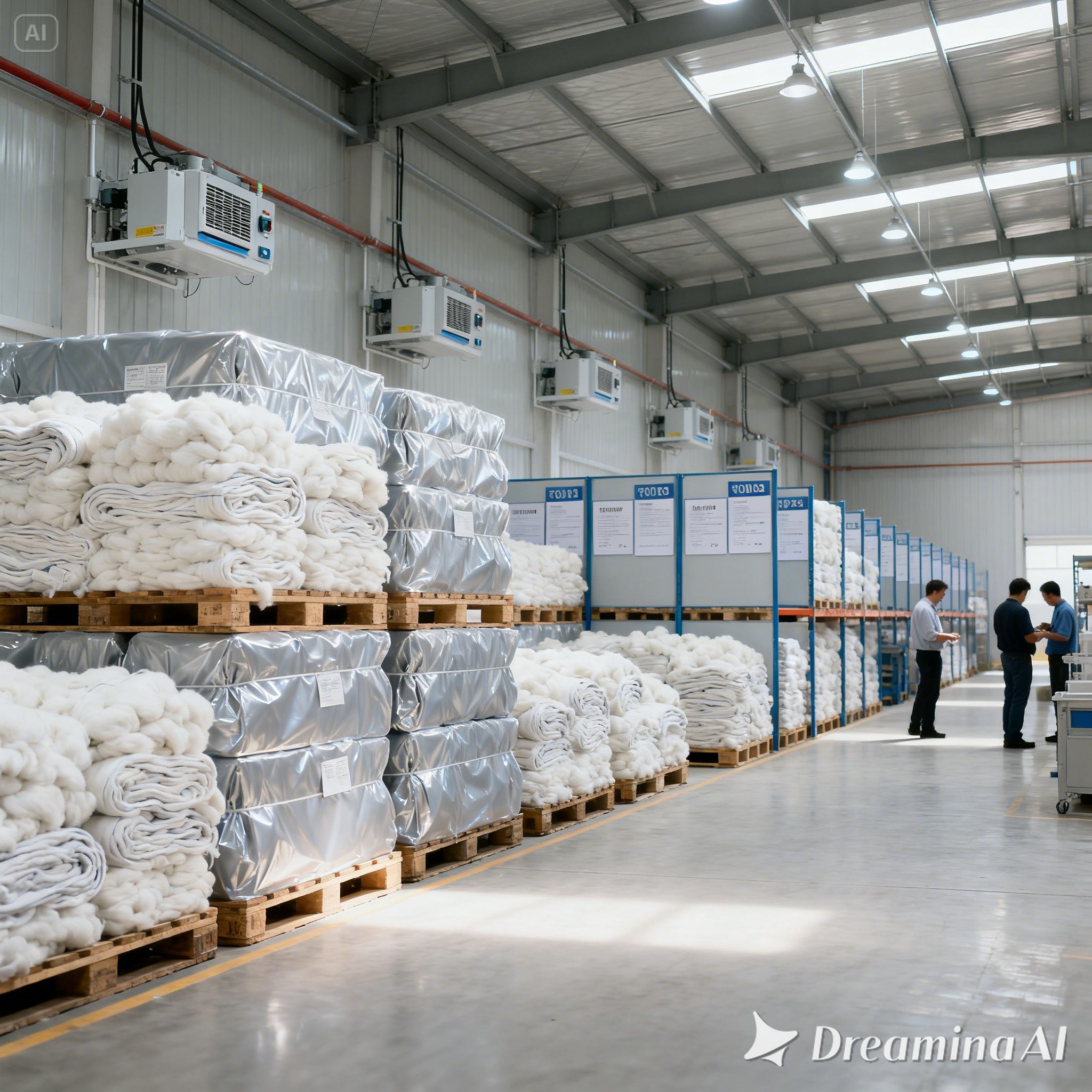
- Use plastic-wrapped or covered pallets to prevent dust exposure
- Stack pallets evenly to avoid compression damage
- Maintain clear spacing between stacks for airflow and access
Additionally, proper stacking reduces the risk of moisture absorption from floors and improves warehouse organization.
3. Clean and Controlled Warehouse Environment
A clean warehouse environment ensures that cotton rags remain free from contamination.
Important Rules
- Keep storage areas dust free and regularly cleaned
- Separate cotton rags from chemicals, oils, and hazardous materials
- Implement pest control measures
- Restrict unnecessary handling of stored materials
Furthermore, businesses should assign designated storage zones for cotton rags to maintain hygiene standards.
4. Packaging and Protection
Packaging plays a key role in protecting cotton rags during storage and transportation.
Recommended Practices
- Use sealed bags or bales to prevent contamination
- Label packages clearly for identification
- Keep packaging intact until usage
- Avoid exposure to direct sunlight
As a result, proper packaging preserves cleanliness and extends shelf life.
5. Inventory Management and Rotation
Efficient inventory management prevents long term storage issues.
Best Practices
- Follow FIFO (First In, First Out) method
- Inspect stock regularly for damage or contamination
- Avoid overstocking beyond storage capacity
Therefore, regular monitoring ensures that businesses use cotton rags before quality declines.
6. Handling Procedures
Even well stored cotton rags can become contaminated through improper handling.
Guidelines
- Train workers on safe handling practices
- Use clean gloves when required
- Avoid placing rags on dirty surfaces
- Minimize unnecessary movement of stock
Consequently, controlled handling maintains product integrity throughout storage.
Conclusion
Proper storage conditions play a vital role in maintaining the quality and safety of cotton rags. By controlling humidity, organizing pallet stacking, and enforcing strict warehouse rules, businesses can prevent contamination and extend product usability.
Ultimately, when companies implement these best practices, they ensure consistent performance, reduce waste, and maintain high industrial standards.