Meta Description
Discover hygienic and space-saving packaging ideas for cotton rags, including compressed bales, standard bales, and poly-bag bundles for factories in Pakistan.
Introduction
Efficient packaging of cotton rags is considered essential in maintaining hygiene, improving storage efficiency, and supporting smooth distribution. Therefore, factories and suppliers across Pakistan must adopt proper packing methods to preserve quality from production to delivery. Below, several effective packaging solutions are explained, along with their benefits and ideal use cases.
Why Packaging Matters in Cotton Rag Distribution
Proper packaging is often overlooked, yet it plays a major role in preventing contamination, reducing damage, and enhancing warehouse organization. Moreover, structured packing methods make handling easier, improve transportation safety, and extend the shelf life of rags. Consequently, overall operational efficiency becomes stronger.
1. Standard Bale Packing (Traditional & Cost-Effective)
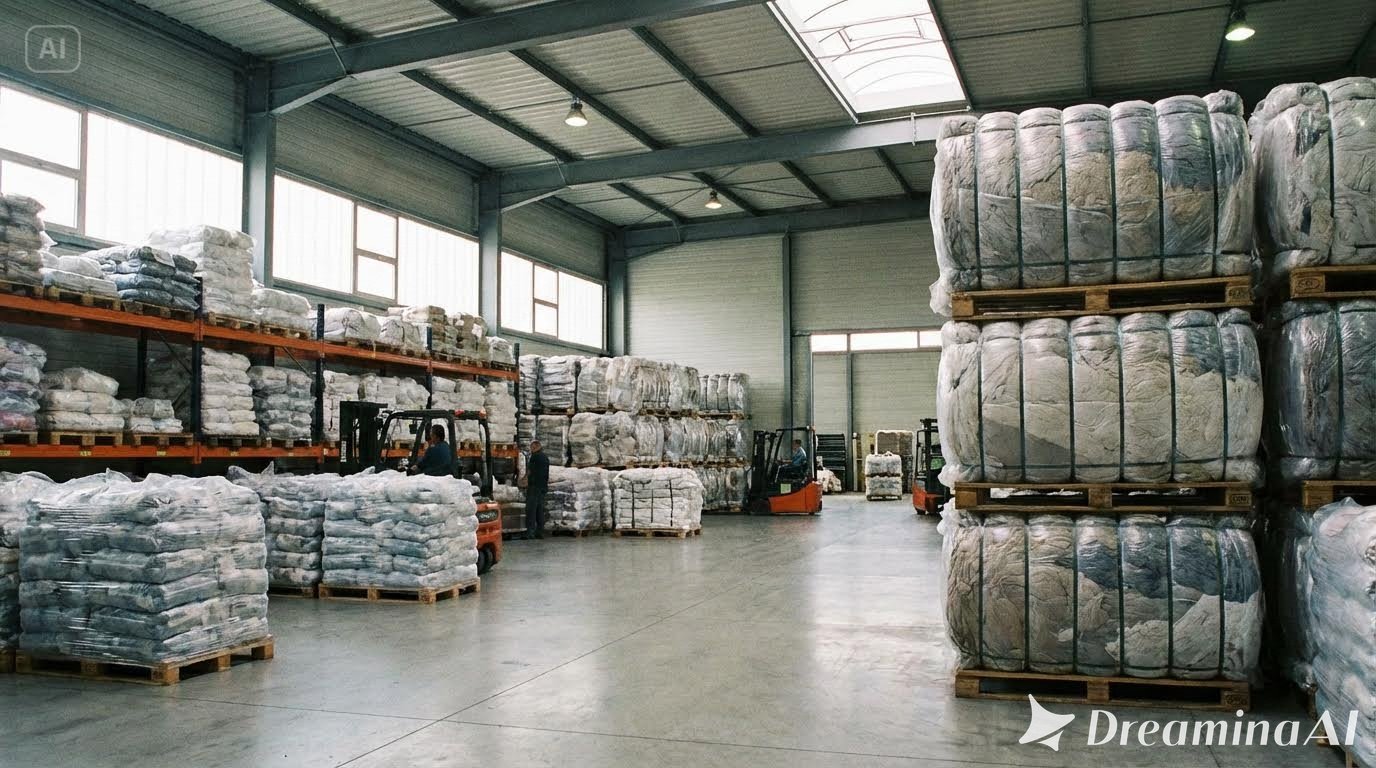
Standard bale packing is widely used in Pakistan because it is economical and easy to handle. In this method, workers compact cotton rags moderately and tie them securely with straps.
Advantages
- Large quantities can be stored in limited space
- Contamination is reduced through enclosed packing
- Transportation becomes easier due to uniform bale size
Best For
General-purpose rags, mixed-grade rags, or rags supplied to workshops and factories.
2. Compressed Bale Packing (High Density, Space-Saving)
Facilities with limited storage consider compressed bale packing the most efficient method. In this process, workers use heavy-duty balers to compress rags to their maximum density.
Advantages
- You save up to 40–60% more space.
- Moisture and dust exposure are minimized
- Handling becomes easier due to stable, consistent block shape
Best For
Bulk shipments, export consignments, wholesalers, and long-term storage.
3. Poly-Bag Bundles (Hygienic & Retail-Friendly)
People often prefer poly-bag bundles when they prioritize hygiene. Here, workers fold, count, and seal cotton rags in transparent or semi-transparent poly bags.
Advantages
- They prevent dust, dirt, and moisture effectively.
- Counted bundles ensure accuracy during distribution
- Bags provide a clean, retail-ready appearance
Best For
Hosiery rags, white rags, lint-free polishing rags, and rags supplied to sensitive environments (printing shops, paint shops, labs, automotive detailing).
4. Shrink-Wrapped Packages (Extra Protection)
People use shrink-wrapping when they need additional protection during storage or transport. They pack rags inside bundles or bales and then cover them with heat-sealed shrink film.
Advantages
- Strong barrier against contamination
- Bags remain intact even during rough handling
- The firm exterior allows users to stack products neatly.
Best For
High-value rag grades or long-distance shipments.
5. Labelled Grade-Based Packaging (Organized & Traceable)
Grade-based labelling is extremely helpful during inventory management. Through clear labelling, buyers can easily identify the rag type without opening the packaging.
Advantages
- Faster picking and dispatch
- Reduced mix-ups between white, coloured, hosiery, and fleece rags
- Clear tracking improves warehouse accuracy
Best For
Factories with multiple rag grades or suppliers managing large stocks.
6. Moisture-Controlled Packaging (For Humid Areas)
In humid environments such as Karachi, you may need to control additional moisture. Use silica gel packs or ventilated bale covers to achieve this.
Advantages
- You can prevent mildew and odour formation.
- You preserve the softness of the rag.
- They extend the storage life.
Best For
Long-term storage, rainy-season shipments, coastal cities.
Conclusion
By adopting proper packaging methods — including standard bales, compressed bales, poly-bag bundles, and shrink-wrapped options — we can achieve significant improvements in storage hygiene and warehouse efficiency. This approach also reduces contamination risks and makes handling smoother throughout the supply chain. As a result, we can deliver cotton rags to buyers in cleaner, safer, and more professional conditions, ensuring that the product value remains intact from the factory to the end user.