Meta Description
Learn the difference between rag bale, pressed bundle, and loose cotton rags with packaging formats, cost comparison, and industrial usage guide.
Introduction
Cotton rags are not only sold by type and quality but also by packaging format. Therefore, understanding how rags are packed is important for pricing, logistics, and industrial usage.
In the textile recycling and MRO supply chain, three common formats exist: rag bales, pressed bundles, and loose cotton rags. Each format serves different needs in terms of cost, handling, and storage efficiency.
What Is a Rag Bale?
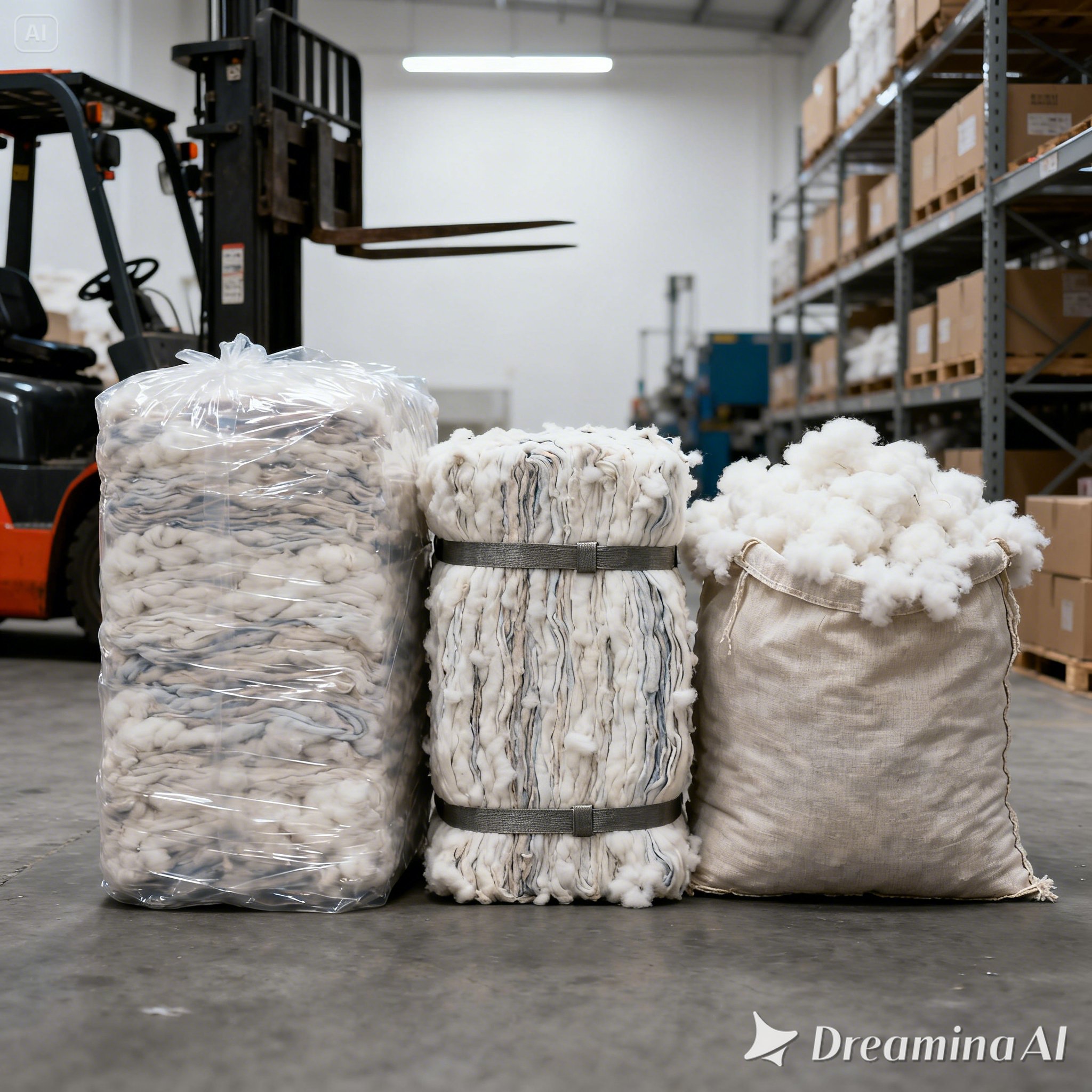
A rag bale is a highly compressed block of cotton rags packed using industrial baling machines. Suppliers compress large volumes of fabric waste into dense, rectangular shapes for easy transport and storage.
Because of compression, bales reduce storage space and shipping costs significantly. Therefore, exporters and large-scale buyers prefer this format.
Key Features of Rag Bales
- Highly compressed packaging
- Heavy weight (often 100–500 kg per bale)
- Plastic or jute wrapping for protection
- Ideal for export and bulk trade
What Are Pressed Bundles?
Pressed bundles are moderately compressed packs of cotton rags. Workers press and tie rags into smaller, manageable bundles without extreme compression.
This format balances convenience and cost efficiency. Therefore, many local buyers prefer pressed bundles for easy handling.
Key Features of Pressed Bundles
- Medium compression level
- Easier to handle than bales
- Usually 10–25 kg per bundle
- Suitable for local industrial supply
What Are Loose Cotton Rags?
Loose cotton rags are uncompressed and unpackaged materials. Suppliers simply sort and deliver rags in bags or sacks without pressing them.
Because they require no machinery or compression process, loose rags are the most flexible but least space-efficient option.
Key Features of Loose Rags
- No compression or shaping
- Packed in sacks or cartons
- Lightweight handling
- Higher storage volume required
Key Differences Between Bale, Bundle, and Loose Formats
| Feature | Rag Bale | Pressed Bundle | Loose Rags |
|---|---|---|---|
| Compression Level | Very High | Medium | None |
| Storage Space | Very Low | Medium | High |
| Transport Cost | Lowest per kg | Moderate | Highest per kg |
| Handling Ease | Hard (needs tools) | Easy | Very Easy |
| Best For | Export & bulk trade | Local industries | Small buyers |
When to Use Each Packaging Type
Choose Rag Bales When:
- Exporting large quantities
- Minimizing logistics costs
- Storing in warehouses long-term
Choose Pressed Bundles When:
- Supplying local factories or workshops
- Needing balance between cost and handling
- Managing regular industrial supply
Choose Loose Rags When:
- Testing product quality
- Small-scale usage
- Short-term cleaning needs
Why Packaging Format Matters in Pricing
Packaging directly affects cost. Therefore:
- Bales offer the lowest cost per kg due to compression
- Bundles offer a balanced pricing structure
- Loose rags have higher handling and transport costs
As a result, buyers must choose format based on both budget and usage efficiency.
Conclusion
Rag bales, pressed bundles, and loose cotton rags each serve different roles in the textile recycling and industrial supply chain. While bales optimize cost and shipping, bundles offer flexibility, and loose rags provide convenience.
Ultimately, understanding these packaging formats helps businesses reduce costs, improve logistics, and choose the right supply method for their needs.