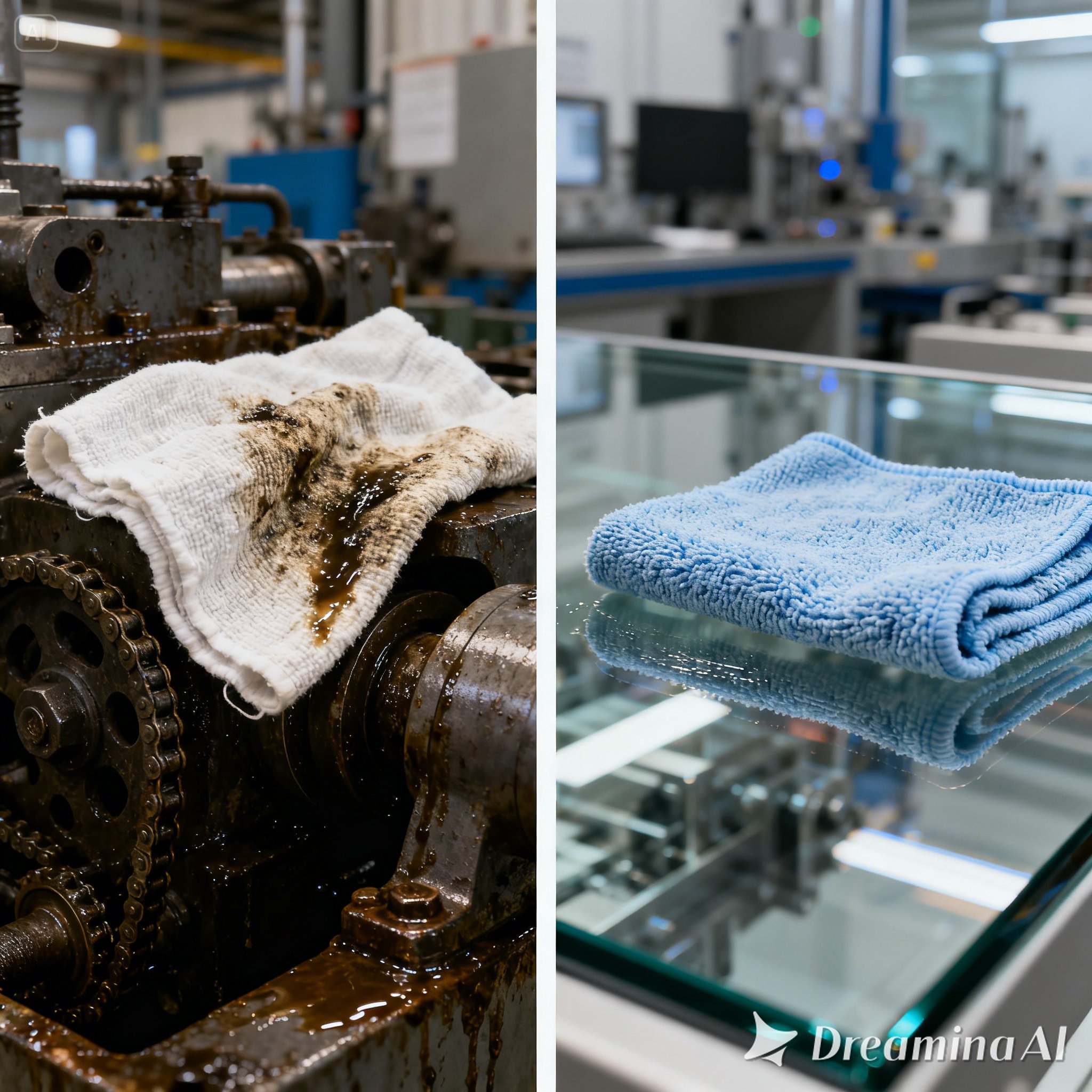
Meta Description
Compare cotton vs microfiber cleaning materials to discover differences in absorbency, durability, cost efficiency, and industrial cleaning performance.
Introduction
Choosing the right cleaning material directly affects cleaning quality, cost efficiency, and maintenance performance. Therefore, industries often compare cotton and microfiber to determine which option works best for their operations.
Both materials offer unique advantages. Cotton provides natural absorbency and durability, while microfiber delivers fine-particle cleaning and lightweight handling. However, the better choice depends on the cleaning application, surface type, and usage environment.
This guide compares cotton and microfiber across key performance factors to help businesses make the right decision.
What Are Cotton Cleaning Rags?
Cotton cleaning rags usually come from recycled textile materials or cotton fabrics. Industries use them for:
- Oil and grease removal
- Heavy machinery cleaning
- Industrial maintenance
- General wiping tasks
Because cotton fibers absorb liquids quickly, these rags perform well in demanding environments.
What Are Microfiber Cleaning Cloths?
Microfiber cloths contain ultra-fine synthetic fibers, usually polyester and polyamide blends. They are designed for:
- Dust removal
- Fine surface cleaning
- Glass and screen cleaning
- Detail-oriented polishing
Because microfiber traps small particles effectively, it performs well in precision cleaning tasks.
Performance Comparison: Cotton vs Microfiber
1. Absorbency
Cotton
Cotton absorbs oil, grease, and liquids extremely well. Therefore, mechanics and maintenance teams prefer it for industrial cleaning.
Microfiber
Microfiber absorbs water efficiently but may struggle with heavy oil and thick grease.
Winner: Cotton for heavy-duty industrial cleaning
2. Dust and Particle Removal
Cotton
Cotton removes visible dirt effectively but may leave some particles behind.
Microfiber
Microfiber attracts and traps tiny dust particles due to its fine fiber structure.
Winner: Microfiber for precision dust cleaning
3. Durability and Reuse Cycles
Cotton
Heavy GSM cotton rags withstand rough industrial usage and repeated washing.
Microfiber
Microfiber lasts long under controlled use but may degrade faster under high heat and harsh industrial conditions.
Winner: Cotton for rugged environments
4. Surface Safety
Cotton
Soft cotton fabrics clean surfaces safely without scratching.
Microfiber
Microfiber performs exceptionally well on glass, mirrors, and polished surfaces.
Winner: Microfiber for delicate finishes
5. Cost Efficiency
Cotton
Recycled cotton rags offer lower cost per use because industries can purchase them in bulk at affordable rates.
Microfiber
Microfiber cloths cost more initially and often require specialized maintenance.
Winner: Cotton for industrial cost savings
6. Environmental Impact
Cotton
Recycled cotton rags support textile recycling and reduce landfill waste.
Microfiber
Microfiber materials contain synthetic fibers that may release microplastics during washing.
Winner: Cotton for sustainability
Side-by-Side Comparison Table
| Feature | Cotton Rags | Microfiber Cloths |
|---|---|---|
| Oil & Grease Absorption | Excellent | Moderate |
| Dust Removal | Good | Excellent |
| Heavy-Duty Cleaning | Excellent | Moderate |
| Precision Surface Cleaning | Good | Excellent |
| Cost Efficiency | High | Medium |
| Sustainability | Better | Lower |
| Reusability | High | High |
| Industrial Suitability | Excellent | Moderate |
Which Material Is Better for Industry?
For heavy industrial cleaning, cotton usually performs better because it handles grease, oil, and rough conditions effectively.
However, microfiber works better for:
- Glass cleaning
- Electronics
- Fine-detail polishing
- Dust-sensitive environments
Therefore, many businesses use both materials depending on the task.
Best Applications for Cotton Rags
Cotton rags perform best in:
- Automotive workshops
- Oil & gas facilities
- Machinery maintenance
- Manufacturing plants
- Marine cleaning
Because these industries require strong absorbency and durability, cotton delivers better overall value.
Conclusion
Both cotton and microfiber offer valuable cleaning benefits. Microfiber excels in fine-detail and dust-sensitive cleaning, while cotton dominates in heavy-duty industrial applications.
Ultimately, businesses should choose the material based on cleaning requirements, operating conditions, and long-term cost efficiency. For oil, grease, and industrial maintenance, cotton remains the more practical and sustainable option.