Meta Description
Learn how to buy cotton rags in bulk in Pakistan with 2025 price insights, supply chain cost drivers, and transportation factors to reduce procurement costs.
Introduction
Buying cotton rags in bulk has become essential for industries such as manufacturing, automotive, textile, and oil & gas. However, many buyers struggle to understand pricing and hidden costs. Therefore, businesses must evaluate both quality and supply chain factors before making bulk purchases.
In 2025, cotton rag prices in Pakistan vary significantly depending on quality, sourcing, and logistics. This guide explains how to buy in bulk and what factors influence pricing.
1. Current Cotton Rag Prices in Pakistan (2025)
Bulk cotton rag prices in Pakistan typically range between:
- PKR 50 to PKR 700 per kg (local market estimate)
- $0.18 to $2.5 per kg (export range)
Prices vary based on type:
- Colored rags (cheapest) → for oil/grease cleaning
- White rags (premium) → for polishing & hygiene
- Hosiery & fleece (mid–high range) → for absorbency
Therefore, understanding your application helps avoid overpaying.
2. Types of Cotton Rags Available
Before purchasing, buyers must choose the correct type:
- White cotton rags
- Colored cotton rags
- Hosiery rags
- Fleece rags
- Mixed recycled rags
Each type serves different industries, and wrong selection can increase cost and reduce efficiency.
3. Key Price Factors in 2025
a. Raw Material Availability
Cotton rags mainly come from textile waste and garment scraps. When supply decreases, prices increase. Therefore, textile production directly affects rag pricing.
b. Labor Costs
Workers perform sorting, cutting, and packing manually. As wages rise in Pakistan, production costs also increase. Consequently, final prices increase.
c. Quality & GSM
Higher GSM (thicker fabric) means better absorbency but higher cost. Premium cotton rags always cost more due to better performance.
d. Packaging Type
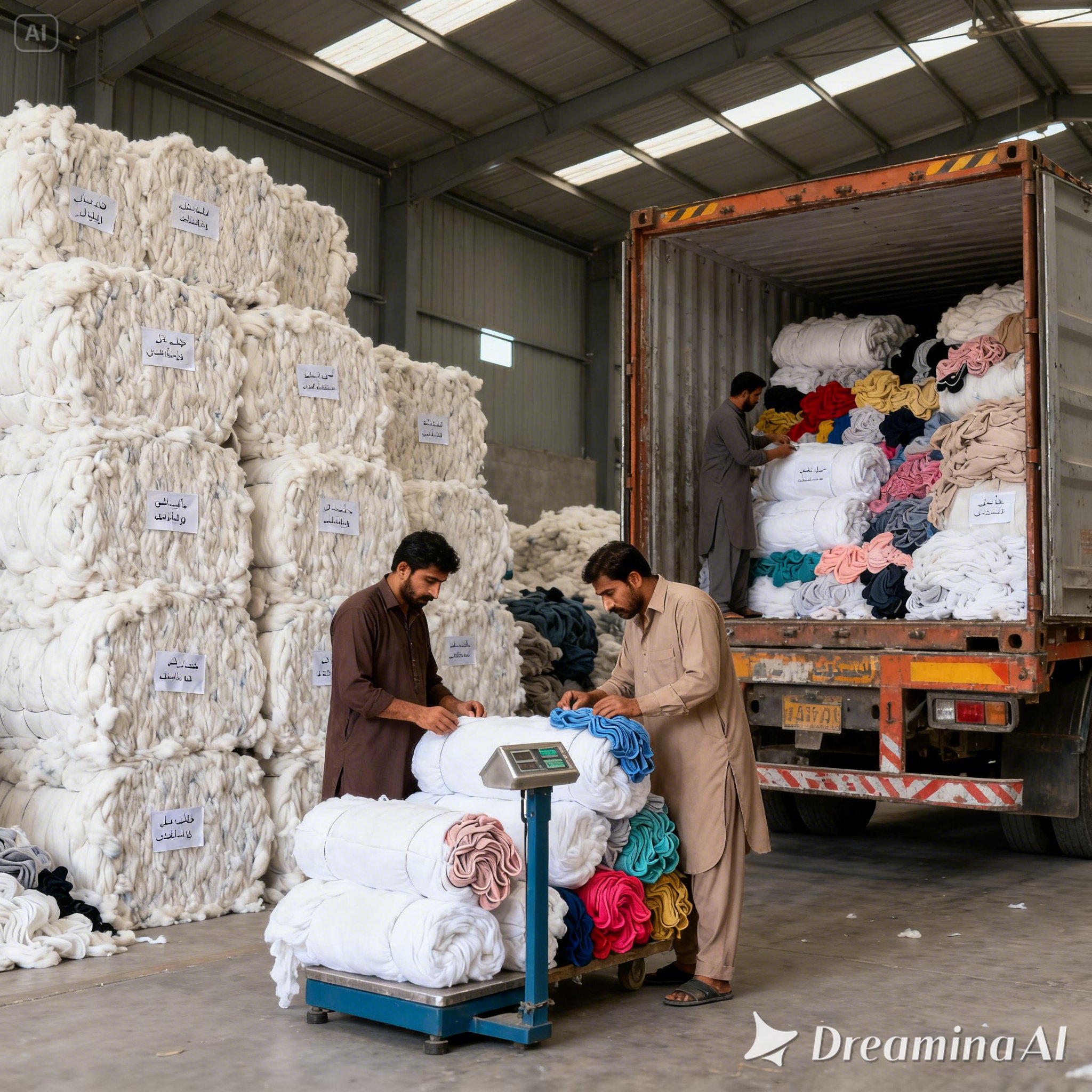
- Compressed bales → cheaper per kg
- Small bundles / poly bags → higher cost
Because packaging adds handling and material expenses, bulk buyers prefer bales.
4. Supply Chain Cost Drivers
The cotton rag supply chain includes multiple stages:
- Textile waste collection
- Sorting and grading
- Cutting and cleaning
- Packaging
- Distribution
Each stage adds cost. Therefore, inefficient supply chains result in higher prices.
Additionally, suppliers with direct factory sourcing offer better rates because they reduce middlemen.
5. Transportation Costs in Pakistan
Transportation plays a major role in final pricing.
Key cost elements include:
- Fuel prices (major impact in 2025)
- Distance from supplier
- Vehicle type (Suzuki, Mazda, container)
- Loading and unloading charges
As fuel costs rise, logistics costs increase significantly. Therefore, nearby suppliers often provide better pricing.
6. How to Buy Cotton Rags in Bulk (Step-by-Step)
Step 1: Define Your Requirement
Select type, GSM, and quantity based on your industry.
Step 2: Shortlist Suppliers
Choose reliable suppliers with consistent supply and good reviews.
Step 3: Request Samples
Always test absorbency, cleanliness, and lint level before bulk purchase.
Step 4: Compare Prices
Analyze per kg rates including transport and packaging.
Step 5: Start with Trial Order
Place a small order first to avoid risk.
7. Tips to Get Better Prices
- Buy in large volume (bulk discount)
- Choose mixed or colored rags for cost-saving
- Build long-term supplier relationships
- Optimize transport routes
- Avoid peak demand seasons
These strategies help reduce procurement costs significantly.
Conclusion
Buying cotton rags in bulk in Pakistan requires more than just comparing prices. Businesses must evaluate quality, supply chain transparency, and transportation costs to make smart decisions.
In 2025, factors such as raw material availability, labor, packaging, and logistics strongly influence pricing. Therefore, companies that understand these cost drivers can negotiate better deals and secure reliable supply.
Ultimately, a strategic approach to procurement ensures both cost efficiency and consistent cleaning performance.