Meta Description
Learn how factories can reduce cleaning costs with reusable cotton rags through bulk purchasing, proper storage, rag reuse systems, employee training, and smarter industrial cleaning practices.
Introduction
Factory cleaning is a necessary part of daily operations, but it can also become a significant recurring expense. Manufacturing plants regularly use cleaning materials for machinery maintenance, oil and grease removal, spill management, tool cleaning, and general housekeeping. Therefore, finding a reliable way to reduce cleaning costs without compromising performance is important for every factory.
One practical solution is the use of reusable cotton rags. Made from durable cotton fabrics, including recycled textile materials, these rags can provide excellent absorbency and wiping performance while reducing dependence on disposable cleaning products. Furthermore, when businesses manage their rag inventory and reuse practices properly, they can lower material consumption and improve overall cleaning efficiency.
Why Factory Cleaning Costs Add Up
Cleaning expenses involve more than the price of a wiping material. Factories may also spend money on:
- Disposable wipes and paper towels
- Cleaning chemicals
- Waste disposal
- Transportation
- Inventory management
- Labor time
- Emergency cleaning supplies
Consequently, even a small factory can accumulate substantial cleaning expenses over the course of a year.
The key is to reduce unnecessary consumption while maintaining an effective cleaning routine.
1. Replace Suitable Disposable Materials
One of the simplest ways to reduce cleaning costs is to replace suitable single-use materials with reusable cotton rags.
Disposable wipes are used and discarded repeatedly. In contrast, durable cotton rags can be reused for appropriate applications according to the factory’s cleaning and contamination-control procedures.
As a result, businesses may need to purchase fewer wiping materials over time.
2. Choose the Right Cotton Rag for Each Task
Not every cleaning task requires the same type of rag.
For example:
- Heavy cotton rags can be useful for machinery and grease removal.
- Highly absorbent rags are suitable for liquid and spill management.
- Low-lint cotton materials may be preferable for sensitive applications.
- Colored cotton rags can work well for general heavy-duty cleaning.
- White cotton rags can make visible contamination easier to identify.
Therefore, matching the rag to the application can prevent unnecessary material consumption.
3. Buy Cotton Rags in Bulk
Factories with high cleaning requirements can benefit from purchasing cotton rags in bulk.
Bulk purchasing may help reduce:
- Cost per kilogram
- Delivery charges
- Ordering frequency
- Procurement workload
- Emergency purchases
Furthermore, maintaining an appropriate inventory ensures that workers always have cleaning materials available.
4. Establish a Rag Reuse System
A structured reuse system can make reusable cotton rags significantly more cost-effective.
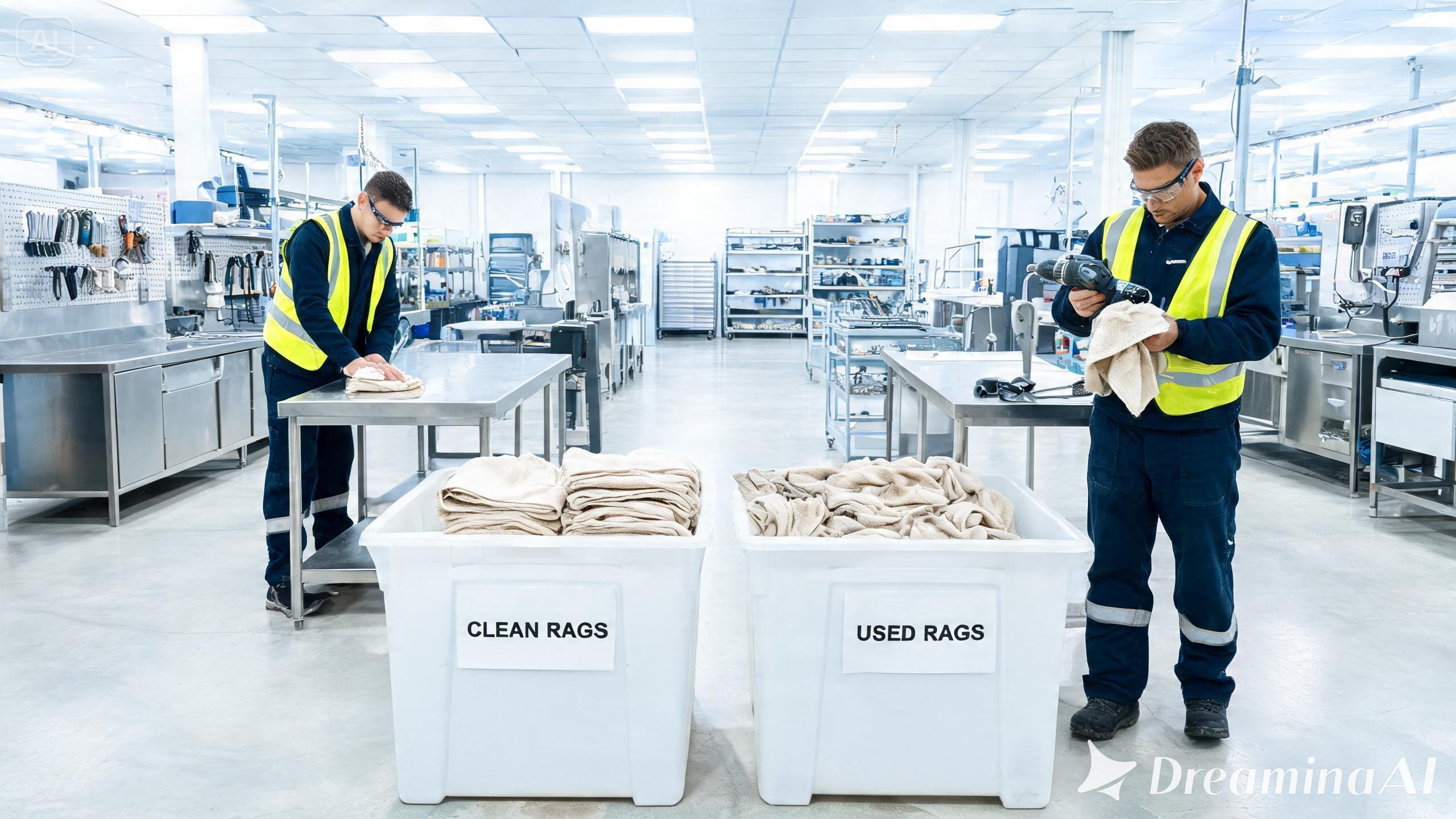
Factories can establish designated collection points for used rags and separate them according to their condition and contamination level.
For suitable applications, reusable rags can then be processed according to the facility’s established laundering and safety procedures.
Consequently, businesses can maximize the useful life of appropriate cleaning materials.
Important: Heavily contaminated rags, particularly those exposed to hazardous chemicals, solvents, flammable substances, or other regulated materials, should be handled according to the facility’s safety and waste-management procedures rather than automatically reused.
5. Reduce Rag Waste Through Proper Training
Workers may use more cleaning material than necessary if they are not given clear guidelines.
Training employees on:
- Choosing the correct rag
- Using an appropriate rag size
- Separating clean and used rags
- Avoiding unnecessary disposal
- Following contamination procedures
can improve material efficiency.
Furthermore, simple workplace instructions can help standardize cleaning practices across different shifts.
6. Store Cotton Rags Correctly
Proper storage protects cotton rags from moisture, dust, and contamination.
Factories should store unused rags in a:
- Clean area
- Dry environment
- Covered storage location
- Clearly labeled inventory section
Used and unused rags should be kept separate.
As a result, businesses can prevent avoidable product loss and maintain better workplace organization.
7. Track Monthly Rag Consumption
You cannot reduce cleaning costs effectively without knowing how much material your factory is using.
Track:
- Kilograms of rags purchased
- Monthly consumption
- Number of cleaning departments
- Types of rags used
- Disposal quantities
- Cleaning-related expenses
For example, if a factory normally consumes 500 kg of cotton rags per month, management can monitor whether process improvements reduce that figure without affecting cleaning quality.
Consequently, purchasing decisions become based on actual usage rather than estimates.
8. Reduce Cleaning Time
The right cotton rag can help workers clean more efficiently.
Highly absorbent and durable materials can reduce the number of pieces needed for certain tasks. Therefore, employees may spend less time replacing cleaning materials and more time completing maintenance activities.
This creates savings beyond the cost of the rag itself.
9. Use Recycled Cotton Rags
Recycled cotton rags can provide an economical solution while supporting sustainable manufacturing.
These products can be made from recovered textile materials that would otherwise become waste.
By choosing recycled cotton rags, factories can:
- Reduce textile waste
- Support circular economy practices
- Reduce dependence on disposable products
- Improve resource efficiency
Furthermore, sustainable procurement can complement a factory’s broader environmental goals.
10. Compare Total Cleaning Costs
When evaluating savings, factories should consider the complete cost of cleaning rather than the purchase price alone.
A useful calculation is:
Total Cleaning Cost = Materials + Labor + Disposal + Transportation + Other Cleaning Expenses
For reusable cotton rags, businesses should also consider any applicable laundering, handling, and disposal costs.
Therefore, comparing the total cost provides a more accurate picture of potential savings.
Example of a Factory Cost-Saving Strategy
Imagine a factory that uses large quantities of disposable wipes every month.
Instead of immediately replacing every wipe with cotton rags, the factory could:
- Identify routine cleaning tasks suitable for cotton rags.
- Test several cotton rag grades.
- Compare absorption and durability.
- Introduce reusable rags in selected departments.
- Establish collection and storage procedures.
- Track monthly consumption.
- Expand the program based on results.
As a result, the factory can gradually reduce unnecessary cleaning-material expenses without disrupting its existing operations.
Common Mistakes That Increase Cleaning Costs
Factories can accidentally increase expenses by:
- Buying the cheapest low-quality rags
- Using the same rag type for every application
- Ordering too much inventory
- Poorly storing clean rags
- Mixing clean and contaminated materials
- Failing to monitor consumption
- Discarding reusable materials unnecessarily
- Ignoring safety requirements for contaminated rags
Therefore, cost reduction requires both the right product and the right cleaning system.
Benefits Beyond Cost Savings
Reusable cotton rags can provide several operational benefits in addition to financial savings.
Better Absorbency
Cotton can effectively absorb many common industrial liquids.
Durable Performance
Suitable heavy-duty cotton rags can withstand demanding wiping tasks.
Reduced Waste
Reuse can reduce dependence on single-use cleaning materials.
Better Inventory Control
Bulk purchasing and organized storage can simplify supply management.
Sustainability
Recycled cotton rags help give textile waste a second life.
Consequently, businesses can improve both operational efficiency and environmental performance.
Conclusion
Reducing factory cleaning costs does not necessarily mean compromising cleaning quality. By introducing suitable reusable cotton rags, businesses can reduce disposable material consumption, improve cleaning efficiency, optimize inventory, and support sustainable operations.
Furthermore, selecting the right rag for each application, buying strategically, training employees, maintaining proper storage, and tracking consumption can maximize the financial benefits.
Ultimately, the most effective approach is to treat cleaning materials as part of the factory’s overall cost-management strategy. With the right system in place, reusable cotton rags can become a simple yet valuable tool for reducing cleaning expenses and improving industrial efficiency.