Meta Description
Learn how to prevent fungal growth in cotton rags with warehouse moisture control SOP, including humidity management, pallet storage, and inspection practices.
Introduction
Cotton rags absorb moisture quickly. Therefore, poor storage conditions can lead to fungal growth, odor, and product loss. In warehouses, even small humidity spikes can trigger contamination.
To prevent this, businesses must control moisture actively and follow a clear SOP (Standard Operating Procedure). This guide explains why fungal growth occurs and how to stop it with practical, step-by-step controls.
Why Cotton Rags Are Vulnerable to Moisture
Cotton fibers contain tiny pores that hold water. As a result, rags exposed to humid air or damp surfaces retain moisture for long periods.
When temperature and humidity rise together, fungi and mold grow rapidly. Consequently, contaminated rags lose absorbency, develop odor, and become unsafe for use.
Common Causes of Fungal Growth in Warehouses
Most issues start with preventable conditions:
- High relative humidity (above 65%)
- Poor ventilation or blocked airflow
- Direct contact with damp floors or walls
- Leaking roofs or pipes
- Improper packaging or torn covers
- Overstocking that traps heat and moisture
Therefore, identifying these risks early helps prevent large-scale damage.
Ideal Storage Conditions for Cotton Rags
To maintain quality, warehouses should follow these baseline targets:
- Humidity: 40%–60% RH
- Temperature: 15°C–30°C
- Airflow: Continuous ventilation (natural or mechanical)
- Elevation: Store on pallets, never on the floor
By maintaining these conditions, businesses reduce the risk of fungal growth significantly.
Warehouse Moisture Control SOP (Step by Step)
1. Receiving & Initial Inspection
- Inspect incoming bales for dampness, odor, or stains
- Reject or isolate any wet or suspicious stock
- Record moisture issues in a receiving log
Result: Prevents contaminated goods from entering storage.
2. Proper Pallet Storage
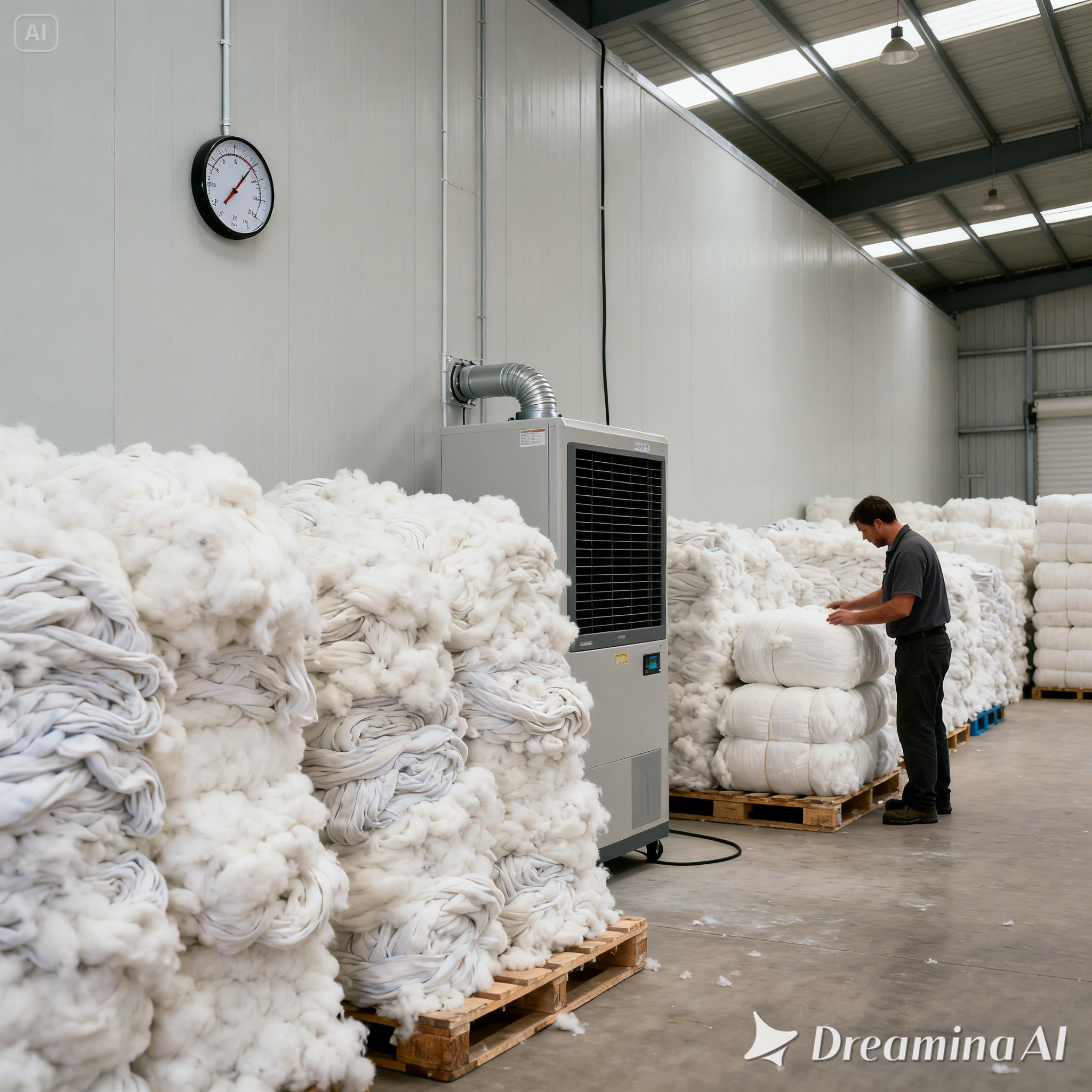
- Place all rags on elevated pallets (minimum 6 inches off the floor)
- Keep 30–45 cm gap from walls
- Avoid direct stacking against concrete surfaces
Result: Reduces moisture transfer from floors and walls.
3. Controlled Stacking
- Stack bales evenly to allow air circulation
- Avoid over-compression and overstacking
- Maintain aisles for airflow and inspection
Result: Prevents heat and moisture buildup within stacks.
4. Humidity Monitoring
- Install hygrometers at multiple warehouse points
- Check and record humidity twice daily
- Trigger alerts if RH exceeds 60%
Result: Enables early action before mold develops.
5. Dehumidification & Ventilation
- Use industrial dehumidifiers in humid seasons
- Ensure cross-ventilation (windows, exhaust fans)
- Run ventilation systems during peak humidity hours
Result: Keeps ambient moisture within safe limits.
6. Packaging Protection
- Store rags in sealed bales or covered packaging
- Replace torn wraps immediately
- Use moisture-resistant covers when required
Result: Shields products from ambient humidity and dust.
7. FIFO Inventory Rotation
- Follow First In, First Out (FIFO)
- Avoid long-term storage of the same batch
- Mark each batch with date and lot number
Result: Reduces risk of moisture accumulation over time.
8. Routine Inspection & Cleaning
- Inspect stock weekly for signs of mold or dampness
- Clean warehouse floors and remove dust regularly
- Isolate and dispose of contaminated materials safely
Result: Stops contamination from spreading.
9. Emergency Response Plan
If moisture or mold appears:
- Immediately isolate affected stock
- Increase ventilation and dehumidification
- Inspect nearby batches
- Document and report the incident
Result: Limits damage and prevents recurrence.
Signs of Fungal Growth to Watch
Train staff to identify early warning signs:
- Musty or damp smell
- Visible black, green, or white spots
- Discoloration or fabric stiffness
- Increased moisture inside packaging
Early detection saves both product and cost.
Business Impact of Poor Moisture Control
If companies ignore moisture control:
- Product rejection increases
- Customer complaints rise
- Operational costs grow
- Brand reputation suffers
Therefore, proactive moisture management protects both quality and profitability.
Conclusion
Cotton rag moisture issues can damage entire inventories if left unchecked. However, businesses can prevent fungal growth by controlling humidity, improving storage practices, and following a structured SOP.
Ultimately, consistent monitoring, proper handling, and disciplined warehouse management ensure that cotton rags remain clean, dry, and ready for use.