Meta Description
Learn the best storage conditions for cotton rags, including humidity control, pallet stacking, ventilation, and warehouse hygiene rules. Keep your industrial wiping rags safe, clean, and contamination-free.
Introduction
Ensuring that cotton rags remain clean and safe for industrial use is essential, especially when they are stored for long periods. Therefore, proper warehouse conditions must be maintained so contamination, moisture damage, and odor development can be prevented. This guide explains the best storage practices that are widely followed in Pakistan’s textile and industrial sectors.
1. Maintain Controlled Humidity Levels
To begin with, manage humidity carefully in any warehouse storing cotton rags. When moisture levels rise above 60%, mold growth, foul smells develop, and fibers weaken.
- Ideally, humidity should be between 40–55%.
- In addition, install dehumidifiers during the monsoon season.
- Furthermore, avoid wet floors near storage areas at all times.
With controlled humidity, cotton rags remain fresh, durable, and free from bacterial contamination.
2. Ensure Adequate Ventilation
Moreover, ensure proper air circulation so that airflow can remove trapped moisture and prevent stale odors.
- Ceiling or wall fans should be kept running at low speed.
- Regularly clean vent grills.
- Make sure the air consistently flows through the storage area instead of becoming trapped around the bundles.
With continuous ventilation, the overall storage environment stays dry and hygienic.
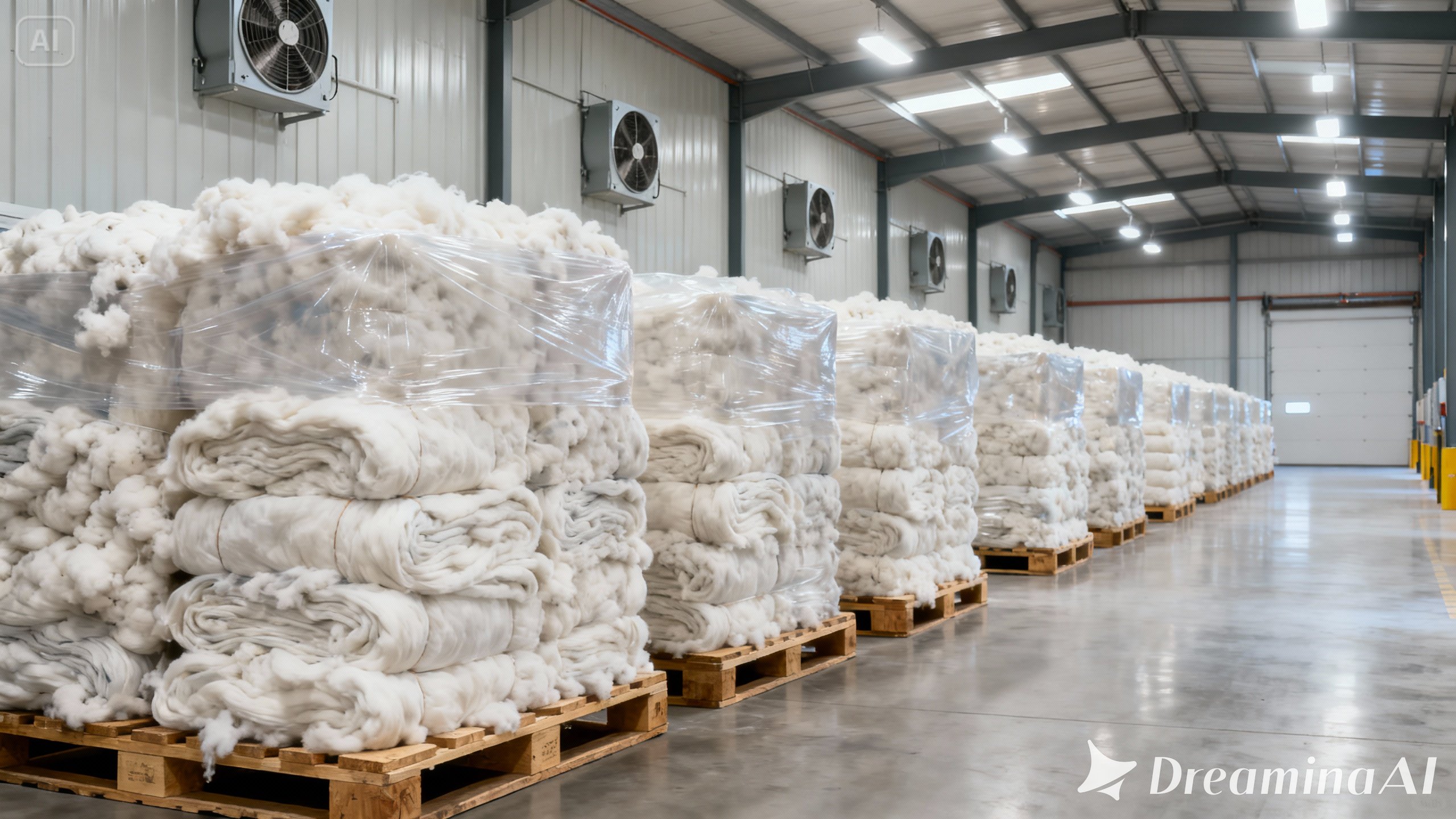
3. Use Palletized Stacking to Prevent Floor Contamination
Never place cotton rags directly on the warehouse floor because dirt, chemicals, and dampness can quickly transfer into the fabric. Therefore, workers should stack the rags on pallets.
- Use wooden or plastic pallets to elevate the bales.
- Maintain a minimum clearance of 6–8 inches above the floor.
- Aisles should also remain clean to avoid dust contamination.
This method ensures that all rags remain protected from ground-level hazards.
4. Follow Proper Bale Wrapping & Layering Methods
Carefully monitor the wrapping quality when packing cotton rags into compressed bales or bundles.
- Shrink wrap, poly bags, or fabric covers should be sealed tightly.
- Ensure that you double-wrap the bundles during long-term storage.
- Labels indicating type and date must be attached for identification.
Proper wrapping completely blocks external dust and debris.
5. Implement Warehouse Cleanliness Rules
To maintain a contamination-free warehouse, hygiene protocols should be strictly enforced.
- Food, drinks, and liquids must be kept away from all storage areas.
- You should conduct pest-control treatments monthly.
- Workers must wear gloves when handling bundles.
- Additionally, sweeping and disinfecting routines must be performed daily.
As a result, cotton rags remain safe for use in sensitive industries such as automotive, textile, and maintenance.
6. Protect Rags from Chemicals & Hazardous Materials
Do not store cotton rags near solvents, oils, dyes, or corrosive chemicals. Even minor exposure can cause stains, odors, or chemical reactions.
- Maintain a minimum distance of 5–10 feet from the chemical shelves.
- Use spill-proof trays in chemical zones.
Proper zoning helps ensure that contamination risks are minimized.
7. Maintain Temperature Stability
Although cotton rags are durable, extreme temperatures can still affect their longevity.
- Warehouse temperatures should remain between 15–28°C.
- Sudden temperature shifts should be avoided.
- Heat sources must not be directed toward stored bales.
Stable temperatures keep the fibers strong and odor-free.
Conclusion
In conclusion, safe storage conditions for cotton rags are essential for keeping them fresh, durable, and contamination-free. When humidity control, pallet stacking, proper ventilation, and warehouse hygiene protocols are consistently enforced, long-term product quality is guaranteed. As a result, industries can depend on clean and reliable wiping rags for daily operations.